Subterranean masonry in Des Moines properties presents distinct microclimates that concentrate predatory pests. In historic brick foundations throughout Sherman Hill and brick-and-mortar basements in Beaverdale,…
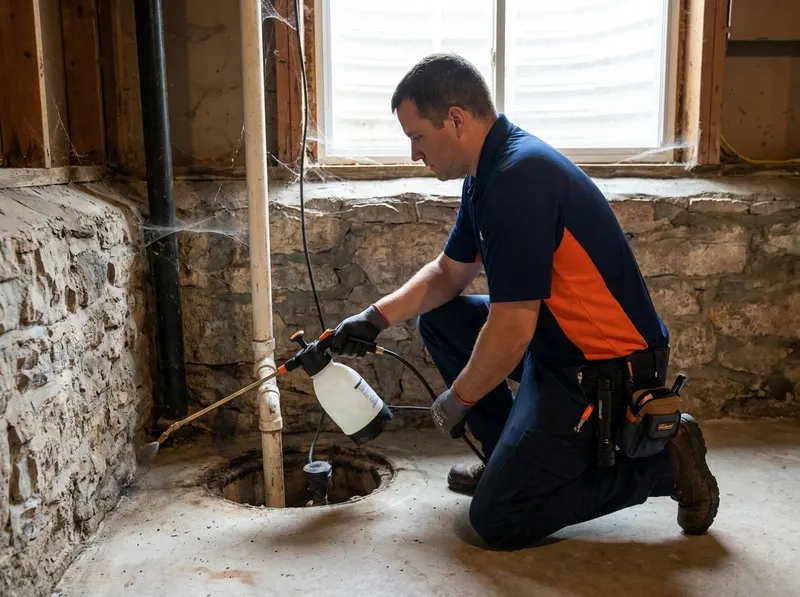
Subterranean masonry in Des Moines properties presents distinct microclimates that concentrate predatory pests. In historic brick foundations throughout Sherman Hill and brick-and-mortar basements in Beaverdale, humidity levels routinely exceed 65%, creating ideal harborage for house centipedes and hunting wolf spiders. House centipedes do not feed on building materials; their presence directly signals an underlying population of silverfish, carpet beetles, or fungus gnats breeding in dark voids. Complete eradication requires breaking this predatory cycle rather than simply applying surface sprays that leave toxic airborne residues around living areas. Low-impact microencapsulated formulations applied directly into block cores and expansion joints target pests at their subterranean resting sites without contaminating indoor air volumes.
Waterbury and Salisbury Oaks homes often feature finished daylight basements where perimeter sill plates sit directly against soil lines, particularly near shaded ravines. Field inspections demonstrate that spiders enter through hairline fractures as narrow as 1/16th of an inch along the top edge of foundation walls or around utility penetrations for plumbing and electrical lines. Targeted mechanical exclusion utilizes silicone-polyurethane sealants along the exterior skirt, cutting off the structural pathways. Treating the unfinished utility areas, such as furnace rooms, sump pump pits, and crawlspaces near Waveland Park, neutralizes pests before they ascend into upper living spaces, preserving interior domestic safety without requiring ongoing multi-year vendor lock-in.
Selecting standalone basement suppression rather than general whole-home fogging is the proper technical choice when pest activity is strictly subterranean. Fogging fills living quarters with unnecessary airborne insecticides that do not penetrate behind wall baseboards or deep inside rim joist cavities where centipedes nest. The trade-off is mechanical: targeted barrier suppression demands meticulous physical inspection and targeted injection, which resolves the root breeding site immediately while leaving the upper floors clean and chemically undisturbed. Grounded exterior applications extend 3 feet up the masonry and 5 feet out across adjacent soil, halting seasonal migrations triggered by heavy Polk County spring rains or early autumn temperature drops.
Every job gets a firm, written price after a free on-site visit.
Tell us about your basement spider & centipede suppression job in DesMoines and we'll send a clear, written quote, usually the same day.
 Dextaro Pest Response